

Simple Guide to Getting Scuba Diving Certified in Koh Tao
A realistic breakdown of costs, logistics, dive schools, and my experience with Ban’s Diving
Scuba diving had always been on my bucket list.
Not in a dramatic, “life-changing” way — just in a one day I want to try that kind of way. And when my cousin Sienna decided she wanted to get scuba certified for her birthday, that was the push we needed.
So we booked a trip to Koh Tao.
If you’ve been researching Koh Tao scuba diving, you already know this small island in the Gulf of Thailand is one of the most popular places in the world to get certified. What you might not know is exactly how it works, what it costs, and what the experience is really like.
This is everything — from flights to ferry logistics to dive training, course pricing, what to expect on the island, and what I’d do differently next time.
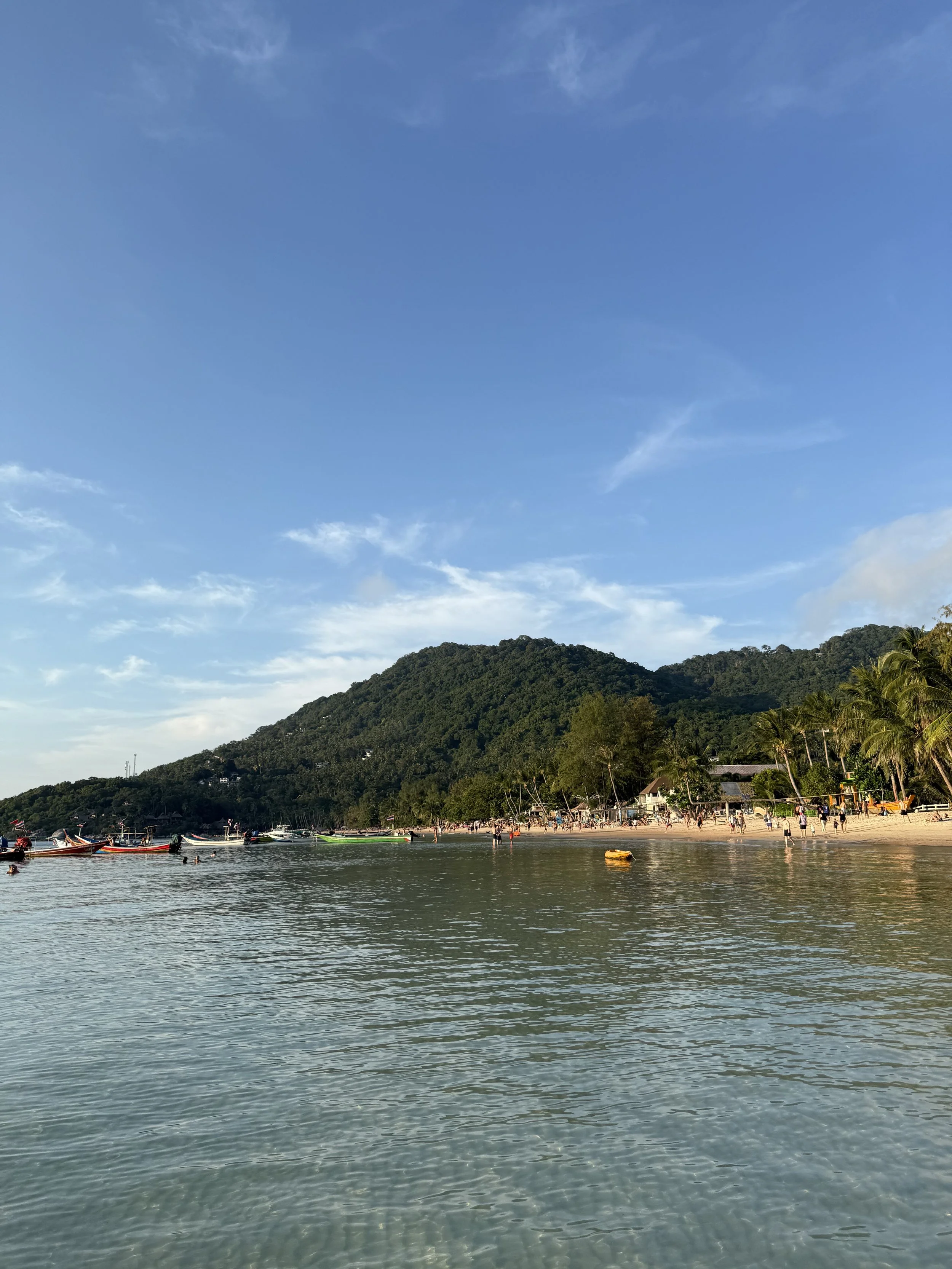
Why Koh Tao Is One of the Best Places to Get Scuba Certified
Koh Tao is a small island in Southeast Asia that has built its reputation around scuba diving.
There are dozens of dive schools, multiple dive boats heading out daily, and divers of all levels walking around town with logbooks in hand. It’s the kind of place where being a scuba diver feels normal.
Why it works so well for first-time divers:
Warm water year-round (around 28–30°C)
Generally calm waters
Shallow water training sites
Competitive course pricing
Access to some of the best dive sites in the Gulf of Thailand
A strong community of dive professionals and instructors
Because there are so many dive centers, pricing stays competitive — which makes Koh Tao one of the most affordable places in the world to complete your PADI Open Water certification.
How to Get to Koh Tao (Step-by-Step Logistics)
Getting to Koh Tao takes planning — but it’s easier than it looks.
We traveled from Chiang Mai.
Step 1: Fly to Chumphon
We flew Nok Air from Chiang Mai to Chumphon, connecting through Don Mueang Airport (DMK).
Budget airlines in Thailand are inexpensive if booked ahead — typically ranging from $35–$70 USD depending on season and timing.
Step 2: Stay Near the Pier
We arrived in Chumphon around 7 PM and stayed one night at a small hotel directly across from the Lomprayah Pier. This made our early morning departure stress-free.
If you’re booking ferry tickets, I recommend checking 12Go Asia for combined flight + ferry options.
Step 3: Speedboat to Koh Tao
We took the 7AM Lomprayah speedboat directly to Koh Tao.
The ride takes approximately 1.5–2 hours, depending on sea conditions.
It was quick and smooth.
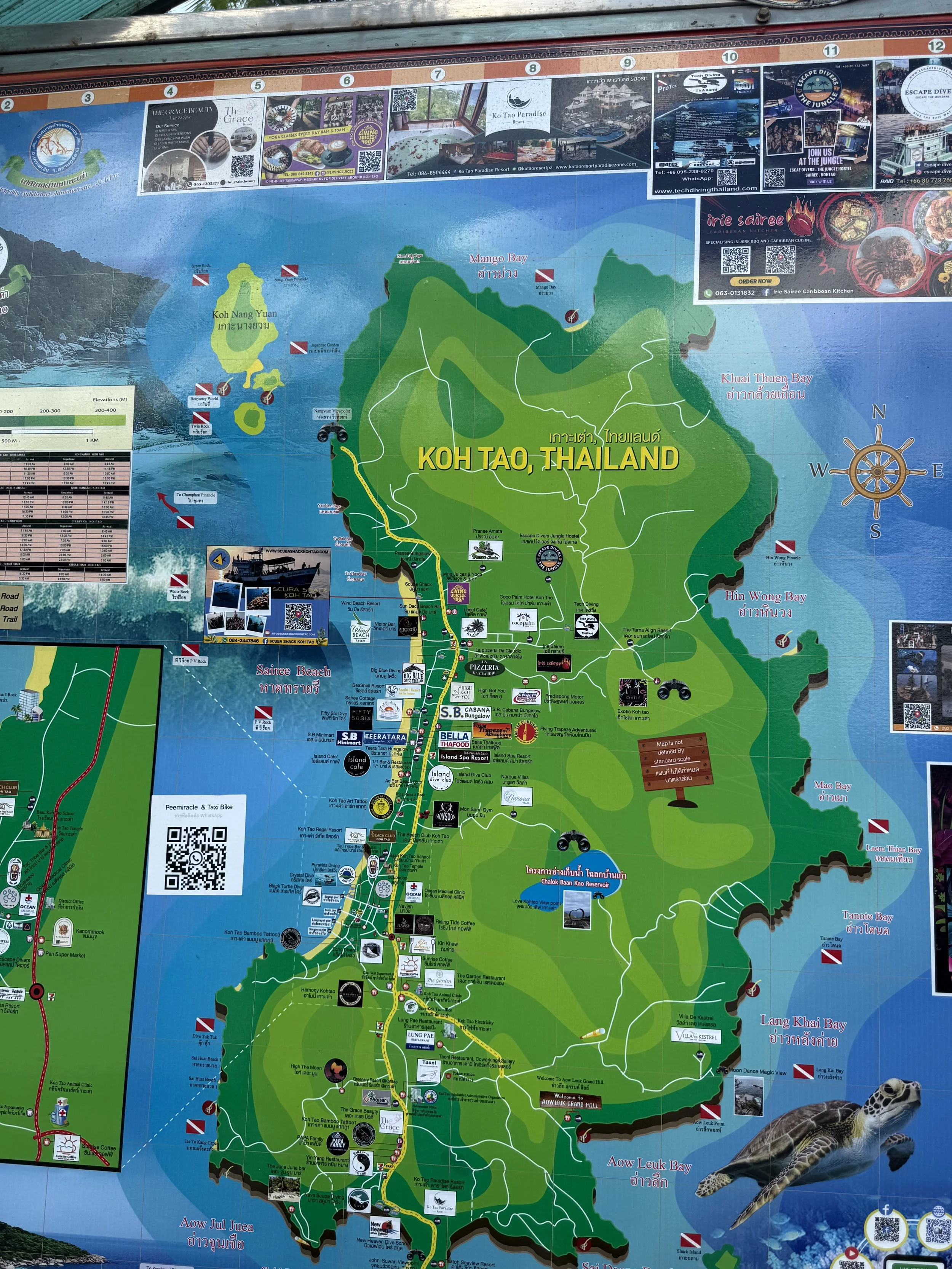
When we arrived in Koh Tao, we skipped the taxi line. Taxis on this small island can be expensive — sometimes 400 baht for a 10–15 minute drive — so we walked to Ban’s Diving, which is located near Sairee Beach.
Though, depending on your diving school, most have shuttles available to and from the pier.
Getting Back: Koh Tao to Chiang Mai
We returned a different way.
Instead of heading back through Chumphon, we took a speedboat to Surat Thani. That boat ride was longer because it stopped in Koh Samui and another island along the way before reaching the mainland.
From Surat Thani, we flew directly back to Chiang Mai.
Even with:
Two flights
Two ferry transfers
Accommodation
Food
Transportation
Our overall travel expenses were still less than the cost of completing the same scuba certification in Florida alone.
Which brings us to pricing.
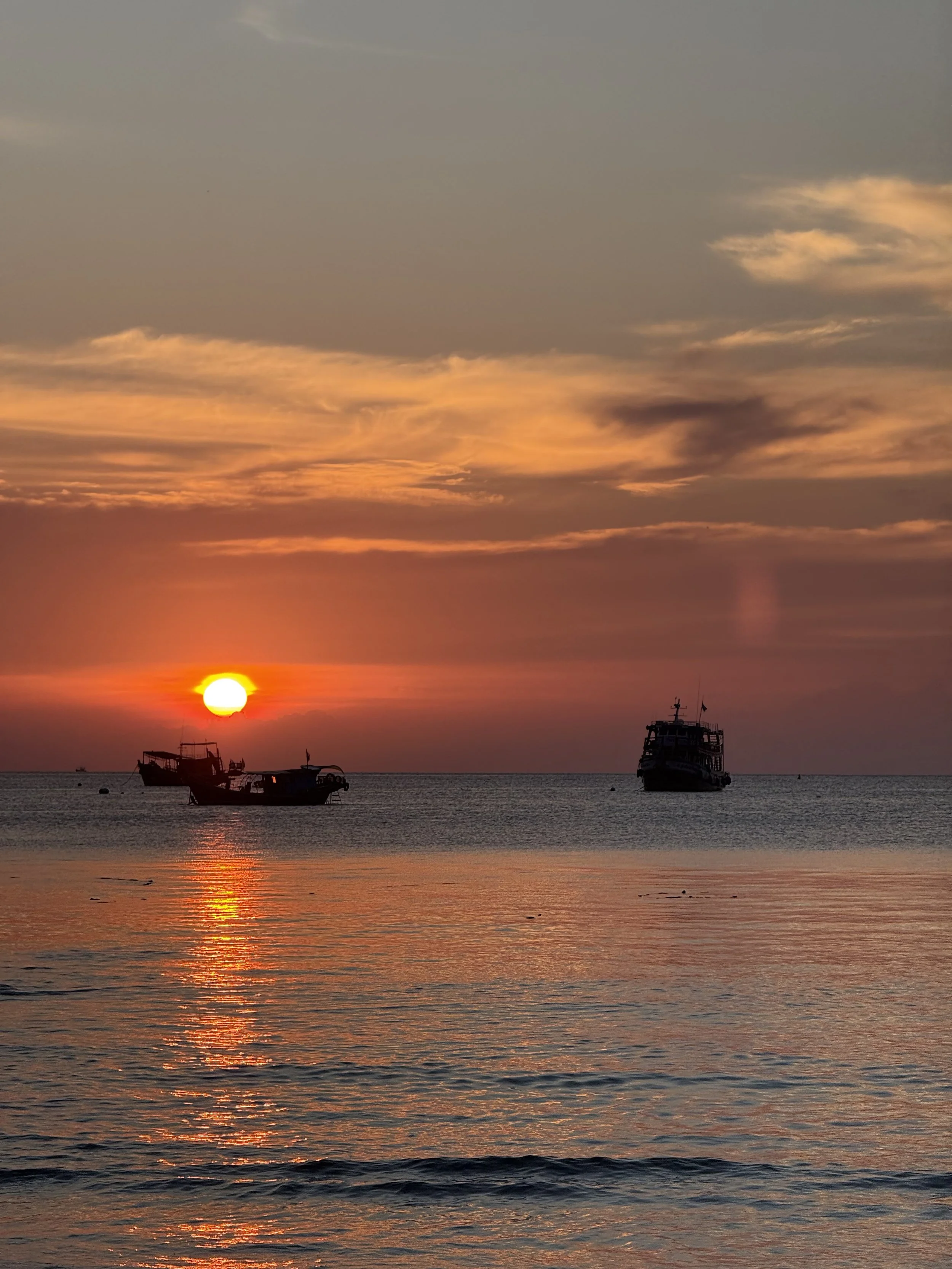
How Much Does the PADI Open Water Course Cost in Koh Tao?
The PADI Open Water Diver Course in Koh Tao typically ranges between:
฿9,000–฿11,000 THB
(roughly $270–$360 USD depending on exchange rate and dive school)
That usually includes:
All study materials
Pool session
Four open water dives
Equipment rental
Certification processing
Instruction from licensed PADI instructors
We paid around $360 USD with accommodation bundled through Ban’s.
How That Compares to Florida
In Jupiter, Florida — where I live part of the year — the same PADI Open Water course can range from:
$550–$700+ USD
And often that does not include:
Full gear rental
Online coursework
Or extra checkout dive fees
So financially, getting certified in Koh Tao can be almost half the cost of doing it in the U.S.
And you’re doing it in warm tropical water instead of potentially colder, lower-visibility conditions.
Choosing a Dive School in Koh Tao
There are so many Koh Tao dive shops that it can feel overwhelming.
You’ll see:
Big schools with large teams
Smaller diving schools offering small groups
PADI courses
SSI dive courses
Professional courses for dive master training
Advanced certifications and specialty courses
We chose Ban’s Diving because:
It’s one of the most established dive centers on the island
It has a prime location near Sairee Beach
It offers accommodation discounts with courses
It runs multiple dive boats daily
It has experienced dive professionals and PADI instructors
If you prefer very small group sizes and a quieter atmosphere, some smaller dive centers may be a better fit.
But for us, Ban’s worked well.
Where to Stay in Koh Tao
We stayed at Ban’s Avenue Guesthouse, which is about a 10-minute walk north of the main dive center.
Important note: it’s divided into two properties.
One of them is directly under a rooftop bar that stays open until 2AM.
If you have a 7AM scuba class — this matters.
We were originally placed in that building and kindly asked to be relocated. They accommodated us without issue, and it made a huge difference.
If you stay there, request the front-desk building.
Sairee Beach is the best place to stay if you want:
Walkable access to dive shops
Restaurants
Beach bars
Convenience for early dive boat departures
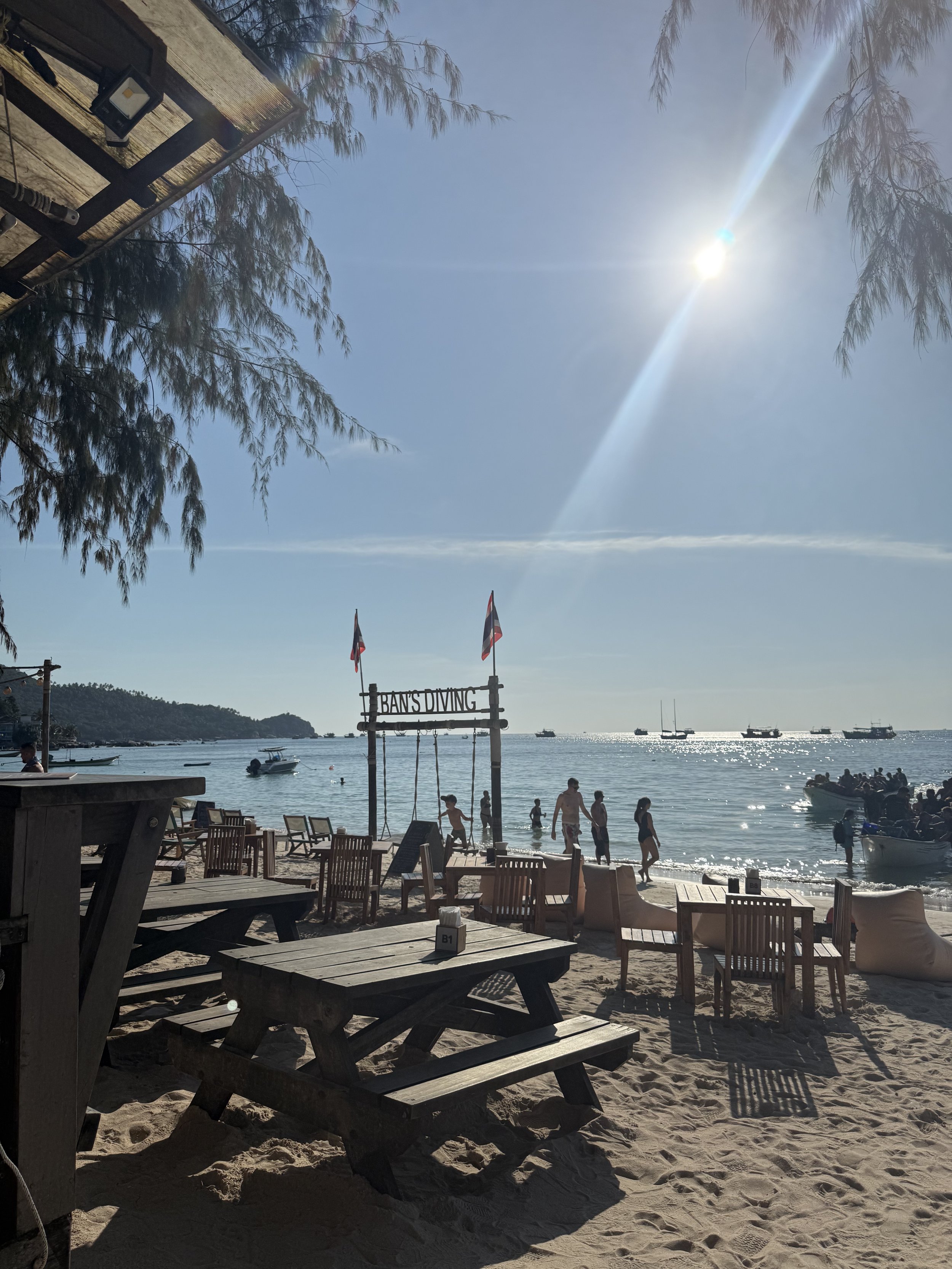
What the PADI Open Water Course Actually Looks Like
The PADI Open Water Certification takes 3–4 days.
Here’s how ours went.
Day 1: Orientation + Learning
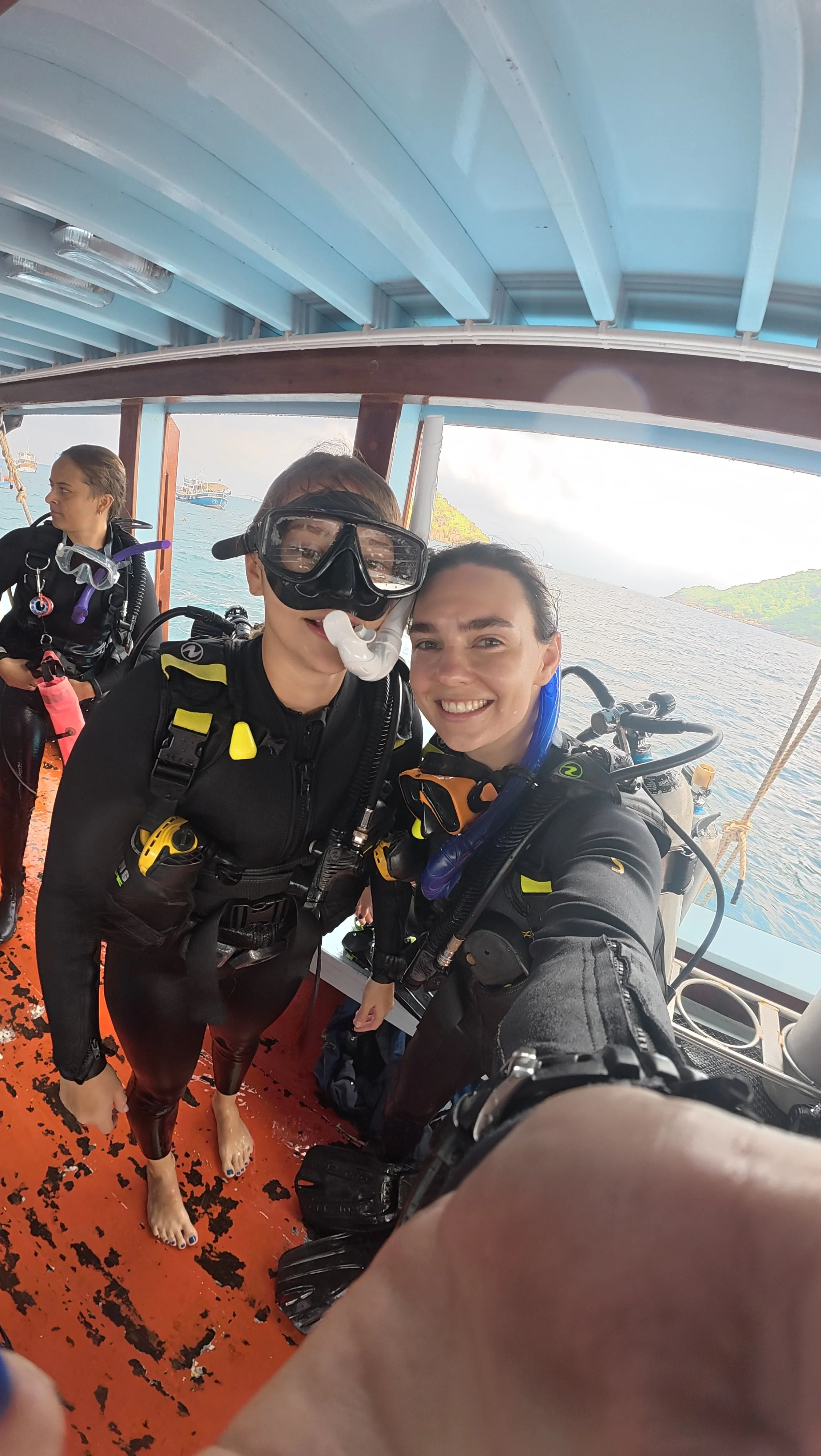
We met our instructor, Nat Duarte. She was exceptional. Calm, patient, and incredibly knowledgeable.
and our small group at the dive center.
We reviewed:
The schedule
Safety procedures
Equipment basics
Expectations for the week
We were assigned three training videos (about an hour each) covering scuba skills, dive physics, and safety principles.
It feels like a lot at first — but they review everything in class so you’re not left confused.
Day 2: Pool Session
This is where you actually start feeling like a scuba diver.
We learned:
How to assemble all our equipment
Pre-dive safety checks
Regulator recovery
Mask clearing (yes, they flood it on purpose)
Emergency ascent procedures
What to do if you run out of air
Practicing in shallow water builds confidence before your first open water dive.
By the end of the pool session, everything felt far less intimidating.
Day 3: First Open Water Dives (12m Maximum Depth)
We boarded the dive boat early in the morning and headed out to our first dive spots.
We dove at:
White Rock
Mango Bay
Twins
Junkyard
These are some of the best Koh Tao dive sites for beginners.
On our first dive, we descended slowly to 12 meters.
That first breath underwater in the ocean feels strange for about 30 seconds.
And then it feels normal.
We practiced skills underwater while exploring coral reefs and spotting marine life — including schools of fish and even spotted stingrays tucked into the reef.
After two dives, we returned for classroom review and completed our final exam.
Day 4: Final Open Water Dives (18m Maximum Depth)
On the final day, we completed two dives to the full 18m maximum depth allowed for Open Water certification.
No more heavy skills practice — just controlled, safe dives exploring the underwater world.
We logged our open water dives in our books.
And just like that — we were officially certified divers.
The Overall Experience
Koh Tao is crowded.
There’s no way around that.
It’s a small island, and scuba diving is its main industry.
Taxis are expensive.
Some beaches charge entrance fees.
Certain areas feel overdeveloped.
But at the same time:
The diving experience was excellent.
The instructors were professional.
The water temperatures were warm.
The dive spots were beautiful.
And the whole experience felt efficient, safe, and organized.
Is Koh Tao the Perfect Place for Your First Dive?
If you want:
Calm waters
Warm temperatures
Affordable pricing
Tons of dive professionals
A strong community of fellow divers
Access to some of the best diving spots in Southeast Asia
Then yes — it’s a great place.
You’ll see divers of all levels here — from first-time students to advanced divers working toward dive master certifications.
Best Time to Go Scuba Diving in Koh Tao (Season Breakdown + Whale Shark Timing)
One of the biggest questions people ask when planning Koh Tao scuba diving is:
When is the best time to go?
The short answer? You can dive year-round.
The better answer? Some months are better than others — especially if you’re hoping to see whale sharks.
Here’s what you need to know.
Weather & Diving Seasons in Koh Tao
Koh Tao sits in the Gulf of Thailand, which has a slightly different weather pattern than Phuket or the Andaman Sea side of Thailand.
☀️ February – May: Hot Season (Best Overall Conditions)
This is often considered the best time for diving in Koh Tao.
Calm waters
Excellent visibility (sometimes 20–30 meters)
Warm water temperatures (28–30°C)
More consistent weather
This period is ideal for:
First-time divers
Open water certification
Advanced certifications
Fun dives
It’s also when the island feels busy but manageable.
If you’re nervous about your first dive, this is the safest bet.
🌊 June – September: Warm + Slightly Less Predictable
Still very diveable.
You may experience:
Occasional storms
Slightly reduced visibility some days
Fewer crowds than peak season
Water temperatures stay warm, and dive boats run daily.
This can actually be a great time to go if you want smaller group sizes and slightly less crowded dive boats.
🌧 October – November: Monsoon Season
This is Koh Tao’s rainiest period.
You can still dive — but expect:
Rougher sea conditions
Lower visibility
Potential ferry delays
Some dive shops may temporarily pause operations during heavy storms.
If your schedule is flexible, I would avoid this period for certification — especially if it’s your first time scuba diving.
When Can You See Whale Sharks in Koh Tao?
Let’s talk about the big one.
Koh Tao is known for whale sharks — the largest fish in the ocean — but sightings are never guaranteed.
Peak whale shark season typically runs:
March – May
and
September – October
But they are wild animals. There is no fixed schedule.
Advanced divers often head to deeper sites like:
Chumphon Pinnacle
Sail Rock (between Koh Tao and Koh Phangan)
We didn’t go to Chumphon Pinnacle during our open water dives since it’s generally for advanced divers due to depth.
We were hopeful for a whale shark sighting — but no luck this time.
And honestly? That’s part of diving.
You don’t control what shows up.
That unpredictability is what makes it exciting.
Water Temperatures & Visibility
One of the reasons Koh Tao is such a perfect place for certification is the consistency.
Water temperatures:
Typically 28–30°C (82–86°F)
You’ll usually wear a short wetsuit or 3mm suit
Visibility:
Often 10–30 meters depending on season
Slightly reduced during monsoon months
Compared to colder dive destinations, learning scuba skills in warm water makes the whole experience more comfortable.
You’re not shivering.
You’re not dealing with heavy gear.
You can focus fully on your scuba skills.
When Is the Best Time for Certification?
If you’re planning specifically to get your PADI Open Water certification, I’d recommend:
February through May for the most consistent conditions.
However, Koh Tao diving runs year-round, and dive professionals are experienced at adjusting for weather conditions.
If you're already traveling Southeast Asia and Koh Tao fits into your route — it’s still a great place regardless of month.
A Note on Crowds
Koh Tao is popular.
It’s one of the most well-known scuba hubs in the world.
During peak months (March–August), expect:
Busy Sairee Beach
Full dive boats
Restaurants with waits
Higher accommodation prices
But because there are so many dive schools, you can still find:
Small groups
Friendly instructors
Great dive experiences
If you prefer a quieter atmosphere, consider shoulder season (June or September).
If Seeing a Whale Shark Is Your Goal
If whale sharks are at the top of your bucket list:
Consider staying long enough to do your Advanced Open Water course.
That certification allows you to dive deeper (up to 30 meters).
Many whale shark sightings occur at deeper top dive sites.
We didn’t stay long enough to continue into advanced certifications — and I do wish we had.
Because once you're certified, you start thinking differently.
You look at destinations and wonder:
Is there diving there?
And that’s when scuba stops being a one-time activity and becomes part of how you travel.
What to Pack for Your Scuba Certification in Koh Tao
One of the best things about getting your PADI Open Water certification in Koh Tao is that you don’t need to bring much dive gear.
All major dive schools provide:
BCD
Regulator
Tank
Wetsuit
Mask
Fins
Weights
That said, there are a few things that will make your overall experience much more comfortable.
Here’s what I recommend packing. And you can check here for my Koh Tao Packing List.
1. Reef-Safe Sunscreen
You’ll spend a lot of time:
On the dive boat
Waiting between dives
Walking around Sairee Beach
Standard sunscreen can damage coral reefs, so choose a reef-safe option.
Affiliate opportunity: link to a reef-safe sunscreen you personally use.
2. Multiple Swimsuits
You’ll likely be diving multiple days in a row.
Nothing is worse than putting on a cold, damp swimsuit at 6:30AM.
Suits without string ties are my personal preference under a wetsuit. Also, a long-sleeve suit can be used instead of a wetsuit if you tend to get hot or under the wetsuit if you tend to be cold.
Bring at least two, so one can dry while you use the other. I brought one for every day we were there :)
3. Easy Slip-On Sandals
You’ll remove shoes before getting on dive boats and walk sandy streets constantly.
Keep it simple.
4. Lightweight Cover-Up or Dry Clothes
After your open water dives, you’ll want something comfortable to change into before heading back to the dive center.
Quick-dry clothes are ideal.
5. Dry Bag
A small dry bag is helpful for:
Phone
Wallet
Logbook
Towel
Most dive boats stay fairly dry, but splashes happen.
Affiliate opportunity: link to a compact travel dry bag.
7. Your Own Mask (Optional but Recommended)
While dive centers provide masks, having your own can make a big difference in comfort and fit.
A leaking mask can be distracting during your first dive.
If you think you’ll continue diving in the future, this is a good investment.
— Also, defoggers like Frog Spit can come in handy if your googles tend to fog up quickly.
8. Notebook or Dive Log App
You’ll log your open water dives after certification.
Some divers prefer a physical logbook. Others use digital dive log apps.
Either way, tracking your dives is part of becoming a certified diver.
We download the PADI app at the end of our course to log our dives and receive our certification.
9. Motion Sickness Medication (Just in Case)
The ferry ride to Koh Tao and the dive boat rides can be smooth, but the weather can change quickly.
If you’re prone to motion sickness, pack medication or natural remedies.
Better to have it and not need it.
10. A Flexible Mindset
This might be the most important thing to pack.
Scuba diving is new.
Your first breath underwater feels strange.
Your ears might take time to equalize.
You may feel nervous before your first open water dive.
That’s normal.
Dive professionals in Koh Tao work with beginners every single day. Trust the process.
What You Don’t Need to Bring
You don’t need:
Full dive gear
Heavy wetsuits
Dive computers (unless you already own one)
Underwater cameras (rentals are available)
If you continue into advanced certifications later, you might invest in:
A dive computer
Your own fins
Specialty gear
But for your PADI Open Water course, keep it simple.
A Note About Underwater Cameras (Especially for Beginners)
This is something I didn’t fully understand before starting my PADI Open Water course:
Most dive schools do not allow beginner students to bring underwater cameras during training dives.
And honestly — I get it.
When you’re learning scuba for the first time, your focus needs to be on:
Buoyancy control
Breathing rhythm
Equalizing your ears
Monitoring your air
Staying aware of your dive instructor and fellow divers
Adding a camera — even something small like a GoPro — creates a distraction.
In beginner courses, safety and skill development always come first.
Many dive centers in Koh Tao will either:
Prohibit cameras entirely during Open Water dives
Or strongly discourage them until you’re certified
Some dive schools have a dive professional or team member who may take photos during your training dives (for an additional fee). That way, you still get memories — without compromising safety.
Once you’re certified and more comfortable in the water, you can bring your own camera on fun dives.
Optional but Helpful Extras
If you want to be extra prepared:
Small microfiber towel (Highly Recommend)
Reusable water bottle
Electrolyte packets
Light rain jacket (especially outside peak season)
After-sun lotion
Koh Tao is warm, humid, and salty. Hydration matters — especially when doing multiple open water dives per day.
Final Packing Advice for First-Time Divers
The beauty of getting certified in Southeast Asia is that dive schools handle everything technical.
Your job is to:
Show up
Pay attention
Practice your scuba skills
And enjoy the experience
That’s it.
Once you’re certified, you’ll start packing differently for future trips — looking for destinations with coral reefs, marine life, and unique dive spots.
And that’s when scuba becomes more than just a bucket list activity.
It becomes part of how you travel
What Happens After You Get Certified?
This is the part no one really talks about.
Once you’re certified, it changes how you plan travel.
Now I’ll look for:
Unique dive spots
Coral reef conservation experiences
Bucket-list marine life sightings
Whale sharks
Advanced courses
Specialty dive training
Scuba diving opens doors.
It adds an entirely new layer to destinations.
And there’s something really exciting about being part of the diving community — meeting fellow divers, swapping stories about dive sites, planning the next underwater adventure.
It becomes more than just a certification.
It becomes a way to travel.
Would I Do It Again?
Yes.
Next time I would:
Stay longer
Go straight into the Advanced Open Water course
Try new dive spots
Plan around peak whale shark season
Explore smaller dive schools for comparison
But as a first-time scuba diver, Koh Tao was the perfect place to start.